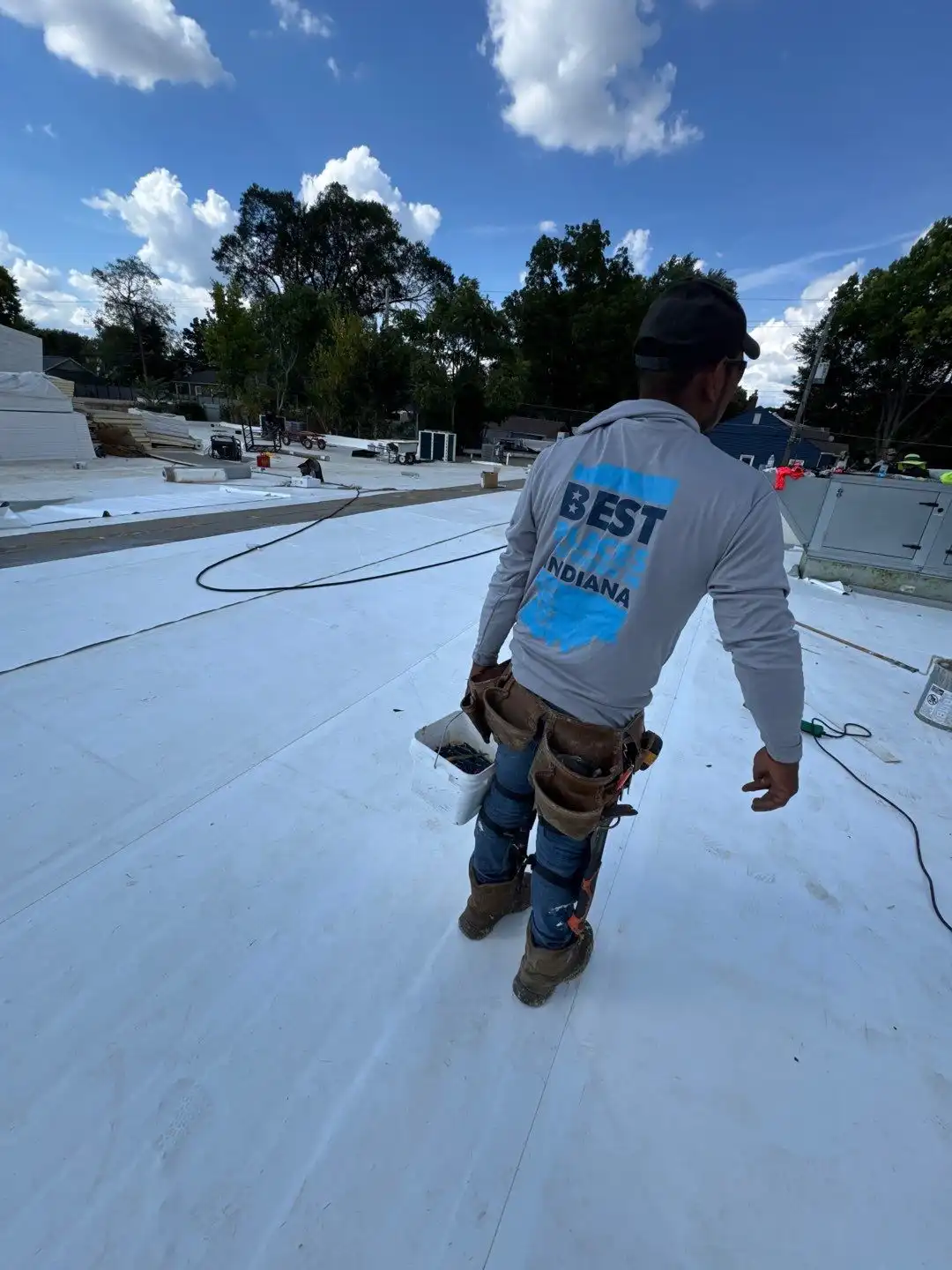
How Single-Ply Roofs Are Installed
A single ply roof installation is a major project, and knowing how it unfolds helps you plan and set clear expectations. While TPO and EPDM differ in their seaming, the overall installation process is similar, and quality depends on the details at every step. Here is what a professional single ply installation looks like on a West Lafayette commercial building.
Inspection and Planning
Every quality installation starts with a thorough inspection and a clear plan. The contractor evaluates the existing roof, the deck, the drainage, and the building's specific needs, then determines the right system and approach. This planning stage addresses questions like whether the old roof can stay or must come off and how the new system will be detailed. For a West Lafayette building, this upfront work prevents surprises and ensures the installation fits the building. West Lafayette Commercial Roofing begins every single ply project with a careful assessment, because a roof planned well is a roof installed well, and the decisions made here shape everything that follows on the project.
Preparing the Existing Roof
Once the plan is set, the existing roof is prepared. Depending on its condition and the approach, this may mean removing the old roofing down to the deck, or in some cases installing over a sound existing roof. Any wet or damaged decking and insulation are addressed, since building over compromised materials only traps problems. Drains and details are evaluated and prepared. For a West Lafayette building, proper preparation creates a sound foundation for the new membrane, which is essential to its performance. A roof is only as good as what it sits on, so this stage matters as much as the membrane itself and is not a place to cut corners.
Insulation and the Substrate
With the roof prepared, insulation and the substrate the membrane attaches to are installed as needed. Proper insulation contributes to the building's energy performance and provides a suitable surface for the membrane, while tapered insulation can improve drainage on roofs prone to ponding. Getting this layer right matters for both efficiency and the roof's long term function. For a West Lafayette building, the insulation and substrate set up the membrane to perform and can solve drainage issues in the process. This is where a thoughtful installation improves on the old roof rather than simply replacing it, building in performance that pays off across the years the roof is in service.
Attaching the Membrane
Next, the single ply membrane is rolled out across the roof and secured according to the system and the building's requirements, whether mechanically fastened, fully adhered, or otherwise attached. The sheets are positioned to allow proper overlap at the seams. Careful layout ensures the membrane covers the roof correctly and the seams fall where they should. For a West Lafayette building, this is where the new roof takes shape, with the membrane forming the continuous protective surface that keeps water out. Proper attachment keeps the membrane secure against wind and the stresses it will face throughout its long service life, which is critical on an exposed commercial roof.
Sealing the Seams
The seams are then sealed, and this is where TPO and EPDM differ. TPO seams are heat welded, with the overlapping edges melted and fused into a continuous bond. EPDM seams are sealed with adhesives or specialized seam tape. Either way, the seams are critical, since they are a common leak point, and proper technique is essential to a watertight roof. For a West Lafayette building, the quality of the seaming determines whether the roof lives up to its potential. West Lafayette Commercial Roofing uses the correct method and proper technique for each system, because this step is exactly where a single ply installation either succeeds or develops future leaks.
Flashing, Details, and Inspection
Finally, the flashings, edges, penetrations, and details are completed, sealing the roof everywhere it meets walls, curbs, pipes, and equipment. These transition points are common leak sources, so detailing them properly is critical to a watertight roof. Once everything is in place, the installation is inspected to confirm the roof is sound. For a West Lafayette building, this attention to the details and the final inspection ensures the whole system performs, not just the open field of the membrane. A roof is finished only when every edge and penetration is sealed correctly, and that thoroughness is what makes a single ply installation truly complete and ready to protect the building.
A Process Built on the Details
From inspection and planning through preparation, insulation, membrane attachment, seam sealing, and detailing, a quality single ply installation is a deliberate process where every step matters. The seams and properly sealed details are what give the roof its long, leak free life. A professional installation done right is the foundation of everything a single ply roof promises on a West Lafayette building.
Drainage deserves attention on any flat or low slope commercial roof, whatever membrane covers it. Even a quality single ply roof struggles when water has nowhere to go, since ponding puts constant stress on the surface and the seams. A thoughtful installation often improves drainage along the way, using tapered insulation to create slope toward the drains and making sure the drains and scuppers can handle the building's runoff. Keeping that drainage clear afterward through maintenance protects the roof for the long haul. For a West Lafayette building prone to standing water, pairing a good single ply membrane with proper drainage gives the roof its best chance at long, leak free performance, which is exactly what West Lafayette Commercial Roofing aims to deliver.
Plan Your Single-Ply Installation With West Lafayette Commercial Roofing
Considering a new single ply roof for your West Lafayette building? Call West Lafayette Commercial Roofing at (765) 676-3491 for a free inspection and a clear plan. We handle every step of TPO and EPDM installation with the care these systems demand, and we will walk you through exactly what your project involves.